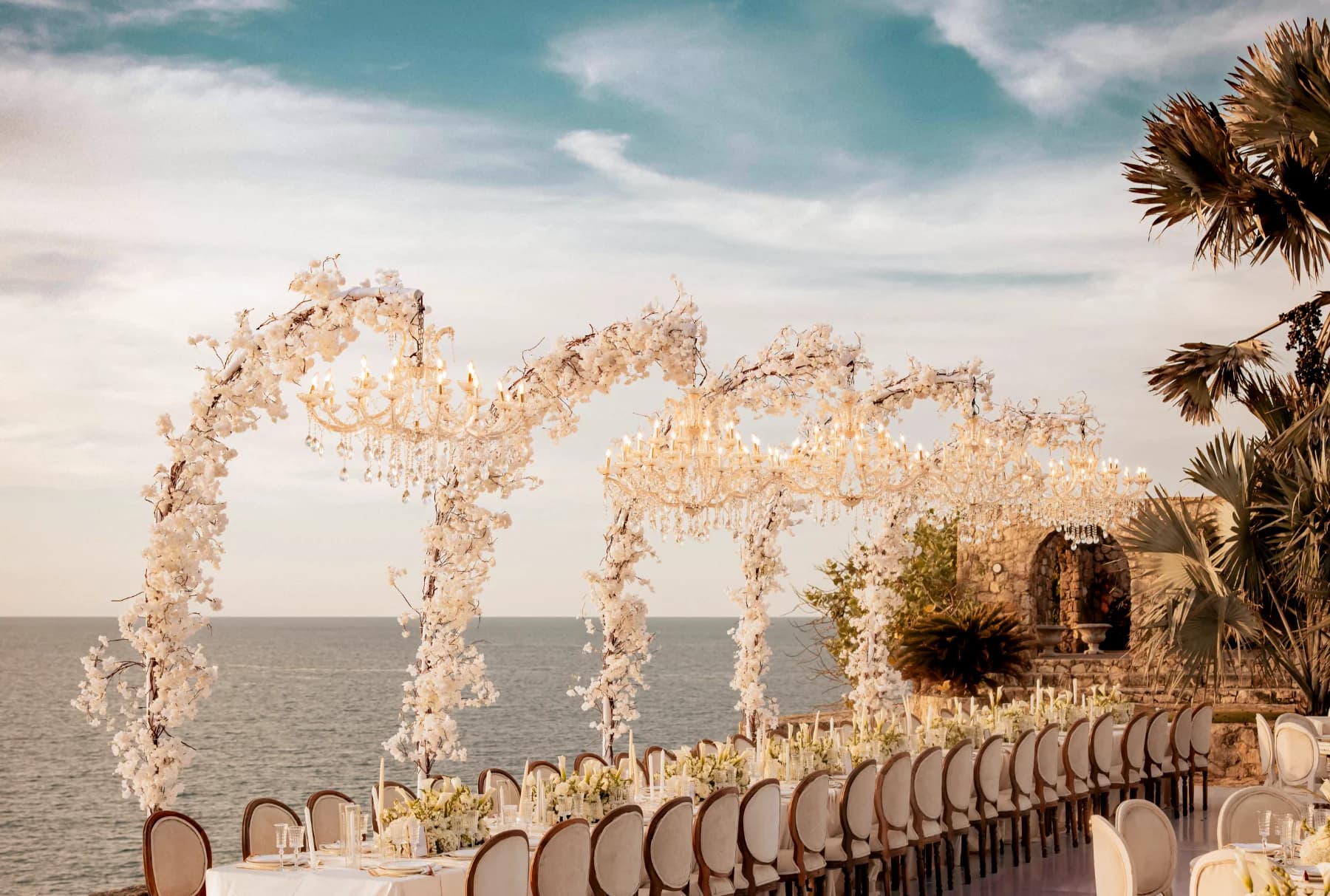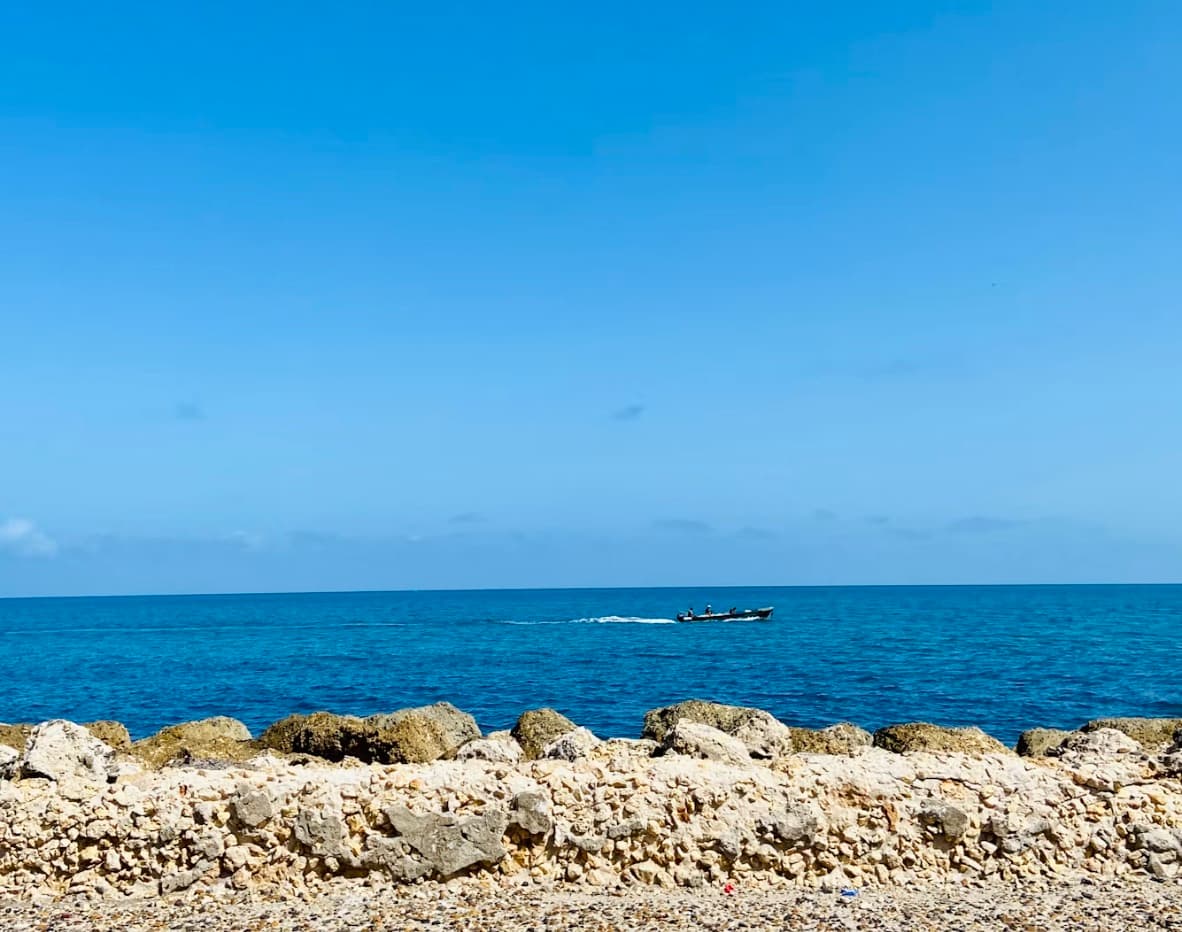
When a couple tells us they want to get married on an island, the first thing we do is explain a reality that almost no one anticipates: there is no infrastructure. No kitchen. No reliable electricity. No running water. No store around the corner. Everything — absolutely everything — arrives by boat. And if something is missing, there is no second chance.
We've catered on Tierra Bomba, on Islas del Rosario, on unnamed private islets. Every operation is an expedition. And fresh seafood, which is what everyone wants to serve at a wedding facing the sea, is exactly the ingredient that carries the most risk in that logistics chain.
The cold chain starts at the dock
Seafood doesn't forgive. Between the moment it leaves the ice in our central kitchen in Cartagena and the moment it's served on a plate on Isla Barú, 3 to 5 hours can pass. During that time, the ambient temperature is 91°F, humidity is above 80%, and the product travels in an open boat under the Caribbean sun.
Our solution: industrial thermal containers with refrigerant gel and dry ice. Each container maintains temperatures below 39°F for 6 hours. We use digital thermometers with continuous logging to monitor the cold chain throughout the journey. If a container rises in temperature, that product doesn't get used. No exceptions.
Ice is another story. For a 120-person wedding on an island, we bring between 660 and 880 pounds of ice. Yes, by boat. Some goes to the kitchen, some to the drink bars, some to the ceviche stations. And we carry 50% extra because ice melts faster than anyone imagines when you're at sea level in the tropics.
Which seafood works and which doesn't
Not all seafood travels the same. After years of island operations, we have a clear list of what works and what's an unnecessary risk.
What works: whole fresh fish (red snapper, snook, king mackerel), shell-on prawns, cleaned and pre-cooked octopus, peeled and deveined shrimp on ice, cleaned squid. These products tolerate cold transport and can be prepared quickly in the field.
What we avoid: raw oysters (high sanitary risk without a perfect cold chain), live lobster (transport mortality), any seafood requiring deep frying (needs heavy equipment and smoke extraction), and preparations with cream or mayonnaise that break in the heat.
The star product on islands is ceviche. Fresh fish cut on the spot, local citrus, chili, red onion, cilantro. Prepared live in front of the guests, over ice, and served immediately. There's nothing fresher than that, and nothing more spectacular facing the ocean.
The double redundancy protocol
In a city kitchen, if you run out of ice you call a supplier. If the power goes out, you have a backup generator. If an ingredient is missing, someone runs to the market. On an island, none of that exists. That's why we operate with what we call the double redundancy protocol: everything critical goes in duplicate.
Ice: we bring double what's calculated. Water: our own potable water tanks, plus backup jugs. Gas: two tanks per griddle. Boats: two support boats in addition to the main cargo boat. If one gets stuck or has a mechanical problem, the other continues. Generators: two power plants, each capable of feeding the entire operation alone. Extra fuel for 8 more hours than planned.
It seems excessive until it happens to you. We've had boats that won't start, generators that fail, storms that delay boarding. Redundancy isn't luxury: it's the difference between solving the problem in 10 minutes or canceling a wedding.
What breaks in transit
Not everything survives the boat ride. Waves, salt spray, humidity, and the pounding of the sea systematically destroy certain things.
Sugar decorations: they melt or soften. Elaborate dessert displays: they fall apart with the movement. Emulsified sauces: they break with heat and vibration. Delicate flowers: they wilt from the salt air within minutes. Artisan bread: it absorbs humidity and turns to gum.
That's why we design island menus with robust preparations. Everything that travels has to withstand impacts, heat, humidity, and salt. Dishes are finished on-site, not in the central kitchen. We send separated components and assemble on the island.
Generators, water, and washing stations
Without reliable electricity, everything runs on generators. We need power for mobile refrigeration, kitchen lighting, blenders, backup ice machines, and charging the crew's phones. The main generator consumes 4 to 5 gallons of fuel per hour. We bring fuel for double the planned time.
Potable water is equally critical. For cooking, for washing, for the service team. We bring 130-gallon tanks of purified water and portable handwashing stations with soap dispensers and disposable towels. It's a non-negotiable sanitary requirement, especially when working with raw seafood.
Portable restrooms are also our responsibility at many island venues. It's not glamorous, but it's essential. An event of 100 people over 6 hours without adequate restrooms is a recipe for disaster.
The timing: what the day looks like
A day of island operations starts long before the event:
5:00 am — Loading boats at the Cartagena dock. Heavy equipment first: generators, gas tanks, water tanks, refrigeration. Then kitchen: griddles, steel tables, utensils. Last: food in sealed thermal containers.
6:30 am — Departure. The trip to Tierra Bomba takes 20-40 minutes. To Islas del Rosario, between 60 and 90 minutes depending on the sea.
7:30 am — Arrival and unloading. Everything comes down by hand on the beach. There's no dock at many venues. The crew walks with boxes on their heads through the water.
8:30 am — Field kitchen setup. Generators on, refrigeration connected, work tables assembled, washing stations installed.
10:00 am — Fresh product reception. Second boat with the day's seafood, additional ice, and service staff.
12:00 pm — Prep complete. Cuts, marinades, base sauces, mise en place for ceviche.
4:00 pm — Guests arrive. Cocktail hour on the beach with live ceviche station and tropical cocktail bar.
11:00 pm — Last service. Breakdown begins.
1:00 am — Loading boats for the return. Everything leaves the way it came in: by hand, across the beach, in the dark.
What happens if the sea is rough
It's the question nobody wants to ask but everyone should. If the sea is too rough to navigate, there is no event. That simple. There's no safe way to transport 2 tons of equipment, 20 staff members, and 880 pounds of ice in rough seas.
That's why we always have a land-based Plan B. A backup venue in the city that we can activate with 24 hours' notice. The menu adapts but the experience isn't lost. We monitor maritime forecasts starting 72 hours before the event and make the go/no-go decision 24 hours prior.
During rainy season (September-November), the probability of weather cancellation goes up. We say it clearly from the first meeting: getting married on an island is spectacular, but it comes with an inherent risk that must be accepted and planned for.
Why it's worth it
After all this, why do we keep doing it? Because when it works — and it works most of the time — there's nothing comparable. A ceviche bar with fish cut on the spot, facing the Caribbean Sea, with your feet in the sand and a passion fruit cocktail in your hand. Grilled prawns with coconut butter served at sunset. A whole fish roast over coals as the sun sets behind the island.
That's the promise. And delivering on it requires exactly the level of preparation we just described. No more, no less.